
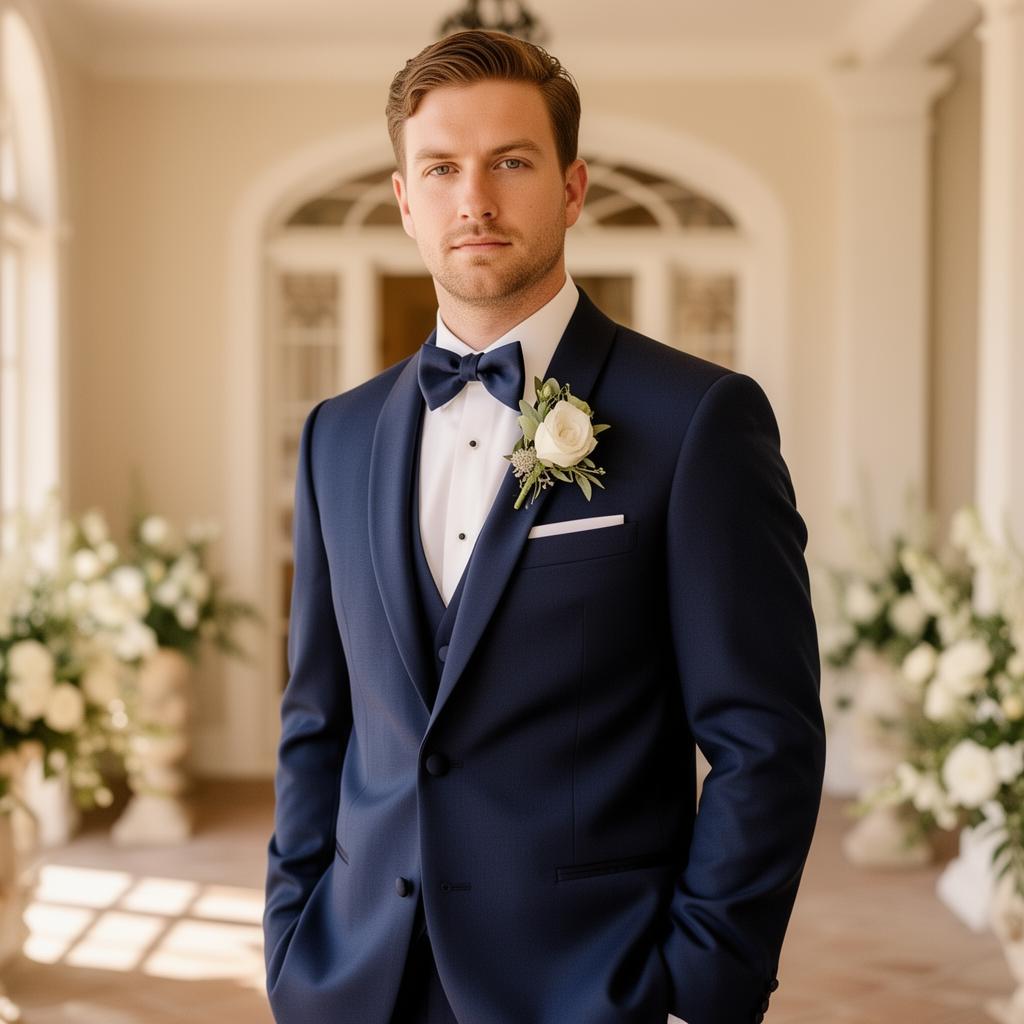
Most Raleigh grooms come to us with the same question, phrased a dozen different ways: *how do I get this right?* The wedding is the most photographed day of your life, the suit is the one constant in every frame, and the off-the-rack options on Glenwood Avenue all start to look the same after the third store.
This is a local guide. The fabric advice is calibrated to North Carolina weather. The timing is calibrated to how long bespoke actually takes. And the styling is calibrated to the venues Raleigh grooms actually get married in — from the Carolina Inn to a backyard in Five Points to a barn in Chatham County.
Start With the Venue and the Season
Before you talk fabric, talk environment. A May wedding at a downtown rooftop and an October ceremony at a horse farm are two different garments.
- Spring and summer (April–September): A high-twist wool in the 7–9 oz range breathes through Raleigh humidity without losing its shape. Fresco and tropical wools are built for exactly this climate. For very warm outdoor ceremonies, a wool-linen blend or a fine cotton can work — but expect more honest wrinkles in the photos.
- Fall and winter (October–March): A mid-weight wool around 10–11 oz holds a sharper line, drapes beautifully, and reads richer on camera. Flannel and worsted wools both photograph well; flannel for softer texture, worsted for crisper formality.
Color follows the same logic. Navy is the most versatile choice for a Raleigh groom and the easiest to re-wear as separates after the wedding. Mid-grey reads classic and photographs cleanly in daylight. Charcoal and black belong at evening or black-tie weddings. Tan, stone, and warm browns work beautifully for outdoor and destination ceremonies.
Fit Is the Whole Game
A $5,000 suit that fits badly photographs worse than a $1,500 suit that fits well. The reason couples remember bespoke wedding suits in their photos a decade later is fit, not fabric.
The four points to get right:
- Shoulder: The seam sits exactly at the edge of your shoulder, not over the deltoid and not short of it. Off-the-rack rarely gets this right on a groom's frame.
- Chest and waist: Clean drape across the chest with a deliberate, modern waist suppression — not aggressive, not boxy.
- Sleeve: A quarter to half inch of shirt cuff showing. This single detail makes every photograph look more considered.
- Trouser break: One soft break over the shoe. No pooling fabric. No high-water hem.
Bespoke is the only reliable way to get all four right at once on most men's bodies. That's the case for it.
Timing: Start Earlier Than You Think
The single most common mistake Raleigh grooms make is starting too late. A bespoke wedding suit isn't a two-week project, but it doesn't require half a year either.
At Limatus, the full process takes 12–16 weeks from first consultation to final delivery:
- Week 1: Initial consultation, fabric selection, and first measurements.
- Weeks 4–5: First fitting on the basted garment.
- Weeks 8–10: Second fitting and refinements.
- Weeks 12–16: Final fitting, last adjustments, and delivery.
Starting four months out is ideal — it gives the garment room to be made properly and gives you room to lose or gain weight without panic. If your wedding is sooner than that, come in anyway — we'll tell you honestly what's possible in your window.
Coordinating the Groomsmen
You don't need every groomsman in the same suit. Some of the most photographed weddings we've dressed have used a shared palette rather than a uniform — groom in a deeper navy, groomsmen in mid-grey or a softer blue, all in coordinated ties and pocket squares. This reads more refined than the matching-rental approach and lets each man wear a suit that actually fits him.
For grooms who do want everyone in the same suit, we can dress a full party at the Raleigh showroom over a series of appointments. Plan eight to ten weeks of lead time for a coordinated group.
Styling Details That Photograph Well
A few small choices that show up in every photograph:
- Lapel: A notch lapel for daytime and most ceremonies; a peak lapel for evening and black-tie. Width should follow your frame — wider on broader builds.
- Tie or bow tie: Match the formality of the venue, not just the time of day. A bow tie with a tuxedo at a downtown evening reception; a knit or grenadine tie with a navy suit at an afternoon ceremony.
- Pocket square: White linen is never wrong. Color it to coordinate with the bridal party's palette, not match it exactly.
- Shoes: A well-polished oxford in black or dark brown. Bespoke shoes are an option if you want them to last decades.
After the Wedding
A bespoke wedding suit isn't a single-use garment. The jacket pairs with chinos for client dinners and travel. The trousers wear cleanly with a fine-gauge knit. Done in navy or mid-grey, your wedding suit becomes the most-worn suit in your closet for years — which is the entire argument for investing in something custom rather than renting.
Schedule the Limatus Wedding Experience
The Limatus Wedding Experience is our dedicated process for grooms and wedding parties in Raleigh and across the Triangle — private consultation, fabric selection, bespoke construction, and full fittings at our Raleigh showroom. Book an appointment and we'll walk you through fabrics, timing, and what makes sense for your wedding.