
Buying Guide • July 9, 2026
How Much Does a Custom Suit Cost? A Transparent Breakdown of What You're Paying For
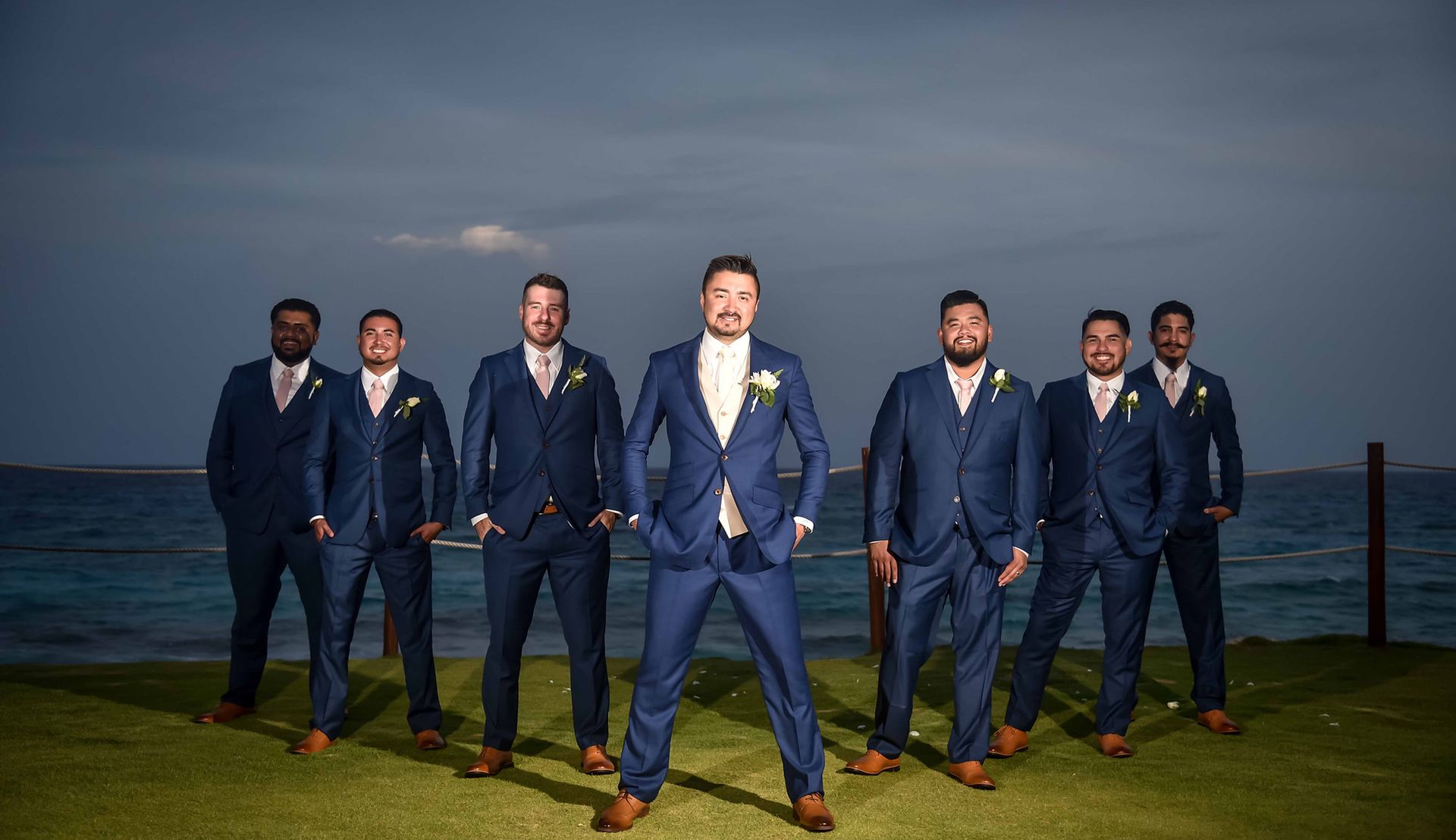
The single most common question we get at the showroom, usually within the first five minutes of a first-time consultation, is some version of "how much is a custom suit?" It's a fair question and one the industry generally does a poor job answering. Prices are hidden behind consultations, quoted in ranges so wide they're useless, or framed in language ("investment piece") that dodges the number entirely.
This guide fixes that. Below is a transparent breakdown of what a custom suit actually costs, what drives the price up or down, and — most importantly — what you're paying for at each tier. If you're comparing Limatus to another tailor, or comparing bespoke to off-the-rack, this is the framework to use.
The Short Answer: What a Custom Suit Costs
A true bespoke suit at Limatus starts at $999+ for a two-piece and moves up from there depending on fabric, construction, and detailing. For context, here's how the broader custom suit market breaks down:
- $500–$900 — Entry-level "custom" from online retailers. Usually made-to-measure (a modified stock pattern), fused construction, mid-tier fabric.
- $900–$1,800 — Better made-to-measure at regional clothiers. Half-canvas construction, upgraded fabrics.
- $1,800–$3,500 — True bespoke starting tier. Hand-drafted pattern, full-canvas construction, premium mill fabrics, and an in-person fitting. This is where Limatus sits.
- $3,500–$7,000+ — High-end bespoke with luxury fabrics (Loro Piana, Scabal, Dormeuil), hand-stitched details, working buttonholes, bemberg linings, and additional hand finishing.
- $7,000–$25,000+ — Savile Row and its peers. Fully hand-cut and hand-sewn, 50+ hours of hand labor per suit, dozens of house-specific details.
The tier you land in is a function of four things: fabric, construction, hand labor, and fitting process. Everything else is marketing.
What Actually Drives the Cost of a Custom Suit
1. Fabric Grade
Fabric is the single largest variable in custom suit pricing. Wool is graded on a Super number — Super 100s, Super 120s, Super 150s, and so on. The number refers to the fineness of the wool fiber. Higher Super numbers mean finer, softer, more luxurious cloth — but also more delicate and prone to wrinkling.
- Super 100s–110s — the workhorse. Durable, structured, holds a press. Ideal for daily-wear business suits. Fabric cost: modest.
- Super 120s–130s — the sweet spot for most bespoke clients. Noticeably softer, still durable enough for regular wear. Fabric cost: moderate.
- Super 150s–180s — luxury cloth. Buttery hand, exceptional drape, but reserved for occasional wear because it wrinkles and wears faster. Fabric cost: significant.
- Super 180s+ and exotic blends — cashmere, vicuña, silk blends. Reserve-only fabrics for special commissions. Fabric cost: very significant.
At Limatus we work primarily with Loro Piana, Vitale Barberis Canonico, Reda, and Huddersfield — Italian and English mills whose cloth is used by the world's leading tailoring houses. The fabric alone in a bespoke suit can range from $200 to well over $1,500 depending on the mill and the Super grade.
2. Canvas Construction
The canvas is the internal structure that gives a jacket its shape. It's invisible from the outside, but it's the single biggest factor in how a suit hangs on your body, how it ages, and how well it survives ten years of wear. There are three types:
- Fused — the canvas is glued to the outer fabric. Used in most off-the-rack suits and cheap "custom" from online retailers. Fails within a few years — the glue breaks down, causing bubbling on the lapels and chest. Cheap to make.
- Half-canvas — the canvas is sewn (not glued) to the chest and lapels; the lower half is fused. A meaningful upgrade. Lasts longer, drapes better. Middle-tier custom.
- Full-canvas — the canvas is sewn to the entire jacket. It moves with your body, molds to your shape over time, and lasts decades with care. The standard for true bespoke. Significantly more expensive to construct.
Every bespoke suit at Limatus is full-canvas. It's not an upgrade. It's baseline. If a tailor is quoting you "bespoke" pricing but using half-canvas or fused construction, you're paying for a category the garment doesn't belong in.
3. Hand Labor
A bespoke suit contains anywhere from 15 to 50+ hours of hand labor. Machine-only construction is faster and cheaper, but hand-stitching produces a garment with more give, more subtlety, and a distinct visual signature. Hand-done details you'll find on higher-tier bespoke:
- Hand-padded lapels and canvas — the lapel rolls softly instead of standing rigidly.
- Hand-stitched buttonholes (Milanese) — takes 45 minutes per hole; adds visible craftsmanship at the cuffs and lapel.
- Hand-attached sleeves and shoulder pads — allows subtle adjustments the machine can't make.
- Pick-stitching along the lapel edge and seams — decorative hand stitching that also strengthens the seam.
More hand labor = more time = higher price. This is where the difference between a $2,000 bespoke suit and a $5,000 bespoke suit typically lives.
4. The Fitting Process
A bespoke suit isn't finished when it leaves the workshop — it's finished when it fits you in person. At Limatus, the fitting process is straightforward and local:
- Showroom fitting — when the completed garment arrives back at our Raleigh showroom, you come in and try it on. The designer evaluates balance, shoulder, length, and drape, and identifies any final refinements.
- Local alterations expert — most bespoke suits are very close at the showroom fitting because the pattern was drafted specifically for you. Minor tweaks — a slight adjustment to sleeve length, trouser break, or waist — are handled quickly by our trusted local alterations partner before delivery.
- In-person, not shipped back and forth — the entire fitting happens in Raleigh. You're not mailing a garment overseas and hoping it comes back right.
That process — a hand-drafted pattern, a real fitting in the showroom, and a local expert for finishing — is a meaningful part of what separates true bespoke from a mail-order made-to-measure program that skips the fitting entirely.
What You Are Not Paying For (When Done Right)
A well-run bespoke clothier keeps the price focused on materials and labor — not overhead. What you shouldn't be paying for:
- A retail markup for brand licensing — designer-name "bespoke" programs pay significant royalties for a name on the label.
- A commissioned salesperson — bespoke is a relationship, not a transaction. Your designer should be the same person from consultation through delivery.
- Rental-model economics — you're not covering the cost of a garment that has to be dry-cleaned and re-sold to the next customer.
Bespoke vs. the Alternatives — Cost Over Time
The most useful way to compare bespoke pricing is over a five-year window, because that's the timeframe most suits are actually worn in.
- Off-the-rack, $400 — figure another $150 in alterations up front. Typically wears well for 2–3 years before pilling, canvas failure, or loss of shape sets in. High effective cost per wear once you factor in replacements.
- Made-to-measure, $800 — no additional alterations. Wears well for 3–5 years. Moderate cost per wear.
- Bespoke, $999+ — full-canvas construction and a hand-drafted pattern typically last 10+ years with care. Low cost per wear across the life of the garment.
A well-made bespoke suit worn once a week for ten years lands under $2 per wear. An off-the-rack suit that pills, loses shape, and needs replacing every two years lands significantly higher — and never fits quite right in the interim.
What to Ask Any Custom Suit Maker
If you're evaluating a bespoke or made-to-measure clothier, these are the questions that separate the real thing from the marketing:
- Is the pattern hand-drafted or is it a modified block? Bespoke = drafted. Made-to-measure = modified.
- Is the construction full-canvas, half-canvas, or fused? True bespoke is full-canvas. Full stop.
- What mill is the fabric from, and what's the Super grade? A good tailor will name the mill without hesitation.
- Is the fitting in person, and where does alterations happen? Look for a real in-person showroom fitting and a local alterations partner — not a mail-in program.
- What's the turnaround? Real bespoke takes 8–12 weeks. Anything faster is almost always made-to-measure.
The Bottom Line
A custom suit is not cheap. It's also not supposed to be — the price reflects real fabric, real construction, and real hours of hand labor. But it should be transparent. You should know exactly what tier you're buying into, exactly what's included, and exactly what you're going to wear ten years from now.
At Limatus Bespoke, a two-piece bespoke suit starts at $999+ in a Super 110s wool from a top Italian mill, full-canvas, with an in-person showroom fitting and local alterations included. Fabric upgrades, three-piece configurations, hand-stitched details, and luxury cloth move the price up from there — and we walk you through every line item during your consultation.
No hidden costs. No pressure. Just the honest price of a suit made only for you.
Book a consultation at our Raleigh showroom, or read about the bespoke process to see what happens at each stage of the eight-to-twelve week timeline.