
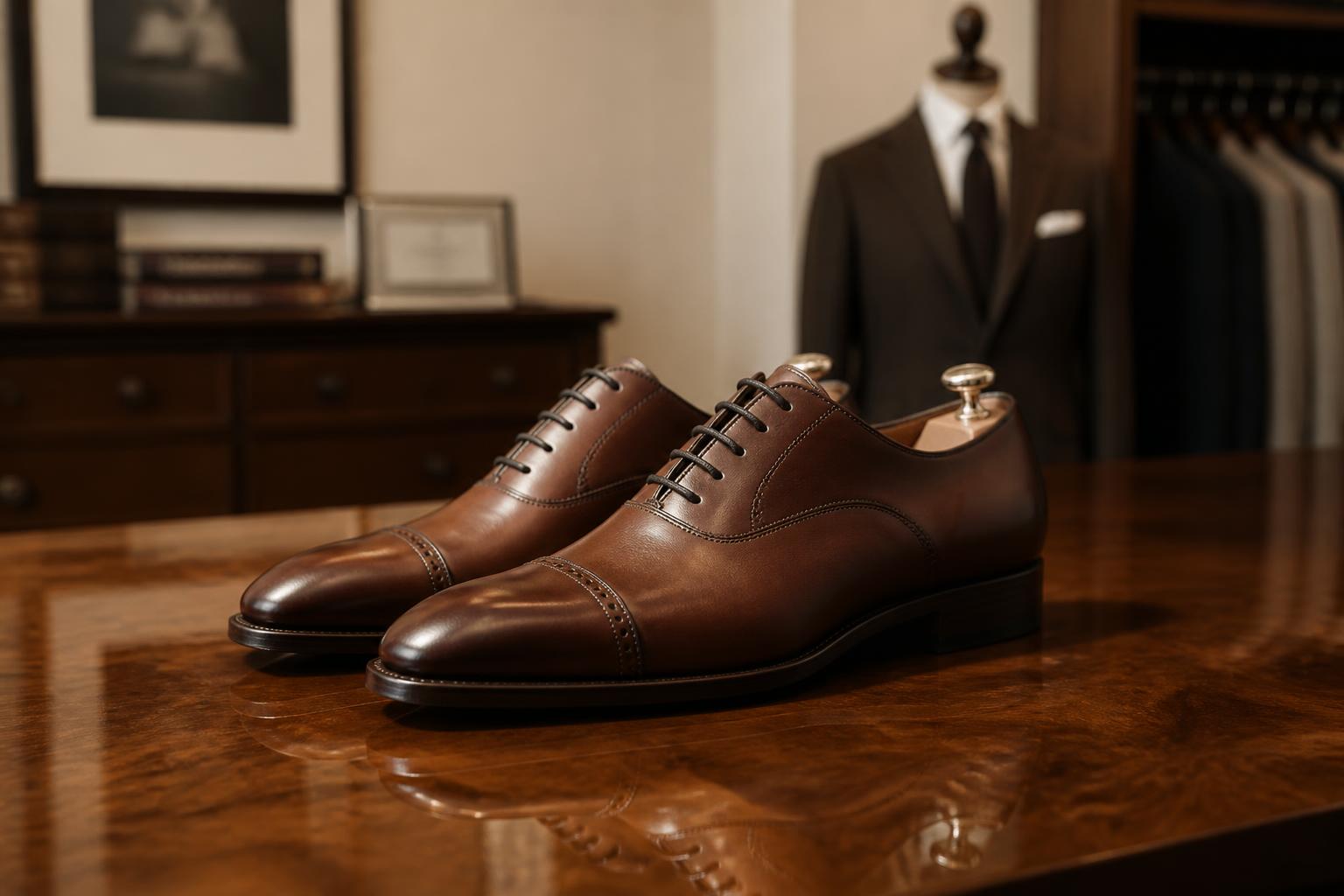
A well-made suit gets most of the attention, but the shoes underneath it are what carry you through the day. Raleigh professionals, grooms, and anyone who spends more than an hour on their feet know the difference between a shoe that fits and a shoe that merely covers your foot. Custom shoes in Raleigh are becoming the logical next step for clients who have already invested in bespoke suiting — or for anyone who is tired of settling for the widths and sizes a department store decided to stock.
This guide breaks down what bespoke shoes actually are, how they differ from made-to-order or custom-painted options, what the process looks like in a Raleigh showroom, and whether the investment makes sense for your life.
What "Custom Shoes" Actually Means
The term is used loosely. Some brands offer custom shoes that only mean you choose the color, sole, or monogram on a standard last. That is made-to-order, not bespoke. True bespoke shoes are built on a wooden last carved to the exact shape of your feet. Every curve, arch, and pressure point is accounted for before the leather is cut.
At Limatus Bespoke, bespoke footwear starts with measurements, a tracing, and an assessment of how you stand and walk. A personal last is created from that data, and your shoes are built around it. The result is not just a different look — it is a different fit.
Why Bespoke Shoes in Raleigh Make Sense
Raleigh is not a walking city in the way New York or London is, but the professionals here still cover ground. Downtown meetings, courthouse stairs, North Hills events, weddings at The Bradford or Market Hall — a full day in the wrong shoe is exhausting. A custom shoe removes the friction points: the heel slip, the pinching across the ball, the arch that never quite matches the insole.
Local bespoke shoes also mean local fittings. You are not shipping tracings overseas and hoping the return fits. You sit with the maker, try the trial pair, and refine. That relationship is part of what makes the result reliable.
The Construction Difference
Most quality bespoke shoes use Goodyear welt construction. That means the upper, insole, and welt are stitched together, and the sole is then stitched to the welt. The benefit is durability and repairability. When the sole wears down, a cobbler can replace it without disturbing the upper. A well-cared-for bespoke shoe can last decades, not seasons.
You will also choose the leather. Full-grain calfskin is the standard for dress shoes. Shell cordovan is harder-wearing and develops a deep patina. Suede offers a softer, more casual register. Exotic leathers are available for clients who want something specific. The sole can be leather, rubber, or a combination depending on how you use the shoe.
Styles That Work in Raleigh
- Oxford: The most formal closed-lace shoe. Ideal for court, boardrooms, and black-tie events.
- Derby: Slightly more open and versatile. Works with suits and smart separates.
- Loafer: A strong choice for Raleigh's warmer months and business-casual environments.
- Monk Strap: A middle ground — dressy without being as formal as an Oxford.
- Chelsea Boot: Clean, practical, and appropriate for fall and winter.
- Dress Sneaker: A minimal leather sneaker built to the same foot-specific last as a dress shoe.
The right style depends on your wardrobe, not just the occasion. A bespoke oxford worn twice a year is a worse investment than a loafer you wear twice a week.
The Cost Question
Custom shoes in Raleigh typically start at a meaningful premium over ready-to-wear designer shoes. The value is not in a logo — it is in the fit, the materials, and the fact that the shoe can be resoled and repaired. If you currently replace two or three pairs of department-store shoes every few years, a single pair of bespoke shoes may cost less over a decade while looking better the entire time.
The calculation is similar to a bespoke suit: buy less, but buy better. The people who get the most from bespoke shoes are those who wear them regularly and have never found an off-the-rack size that truly fits.
Who Benefits Most
- Professionals on their feet: Attorneys, consultants, and executives who move between offices and events all day.
- Grooms: A wedding day is long. Custom shoes hold up through portraits, ceremony, dinner, and dancing.
- Anyone between sizes: If you are a 10.5 in one brand and an 11 in another, or if one foot is larger than the other, bespoke solves the compromise.
- Clients with foot issues: Bunions, high arches, and irregular widths are difficult to fit in standard lasts. Bespoke shoes are built around those realities.
What to Expect from the Process
Bespoke shoes are not a quick purchase. The process usually takes several weeks from first measurement to final delivery:
- Consultation and measurement: Foot tracing, posture assessment, and discussion of style, leather, and sole.
- Last creation: A personal wooden last is carved or digitized from your measurements.
- Trial fitting: A test shoe is made for you to walk in and evaluate fit.
- Final construction: Adjustments are made, and the finished shoes are built.
- Delivery and care guidance: You receive the shoes with recommendations for care, storage, and resoling.
The Verdict
Custom shoes are worth it if fit, longevity, and daily comfort matter to you. They are not worth it if you only need something for a single event or if you replace shoes based on trend rather than wear. In Raleigh, where bespoke suiting is already well established, custom shoes are the natural extension of dressing with intention — from the shoulders down to the soles.
Schedule the Bespoke Experience
If you are curious whether bespoke shoes are right for you, the best next step is to try the process. Schedule the Bespoke Experience at our Raleigh showroom and we will walk you through leathers, lasts, and what makes sense for the way you actually move through your day.